AI Consulting
AI-ready? Take the check with us. Consulting and strategy following the Sellium Method.
Sellium is a 360° AI agency based in Chemnitz, Saxony. We build AI applications that automate your business processes – from consulting on artificial intelligence and company-specific integration solutions to AI training for your staff.
AI-ready? Take the check with us. Consulting and strategy following the Sellium Method.
Automate processes with workflows or AI agents
AI knowledge for specialists and managers in a real business context.
Spot inefficiencies, make bottlenecks visible
Rethink workflows and anchor them with best practices
AI training and coaching – securing acceptance and adoption
Interactive dashboards and KPI models for fast decisions
Recommendation systems and chatbots along the customer journey
Privacy First AI: data quality, GDPR, access controls and responsible-AI guidelines
ETL processes: extract, transform, load. Preparing data so AI can use it
how it works
We train every level and department of the company on AI and its possibilities, laying the foundation for the transformation.
Our dedicated format supports the analysis and selection of your business processes in a Use Case Discovery — each use case stands for the automation of one specific business process. In parallel, our AI Readiness Check determines your company's current AI maturity and classifies existing AI skills. The IT Check-Up sets the course for your individual AI architecture.
We develop a tailored AI strategy for you with an integrated implementation roadmap. Pilot projects you can experience follow — instead of more concept papers.
Horizontal and vertical scaling of the automated business processes (use cases) for real ROI, followed by the transfer into the production environment.
about us
Sellium GmbH, founded in 2025 as a 360° AI agency, is an innovative provider of artificial intelligence services. Because we see AI as a key technology of the future, we follow an “AI First” approach and support our clients in expanding and rebuilding their business models and value chains. The goal is to anchor AI as a core strategy and build lasting competitive advantages. That means:
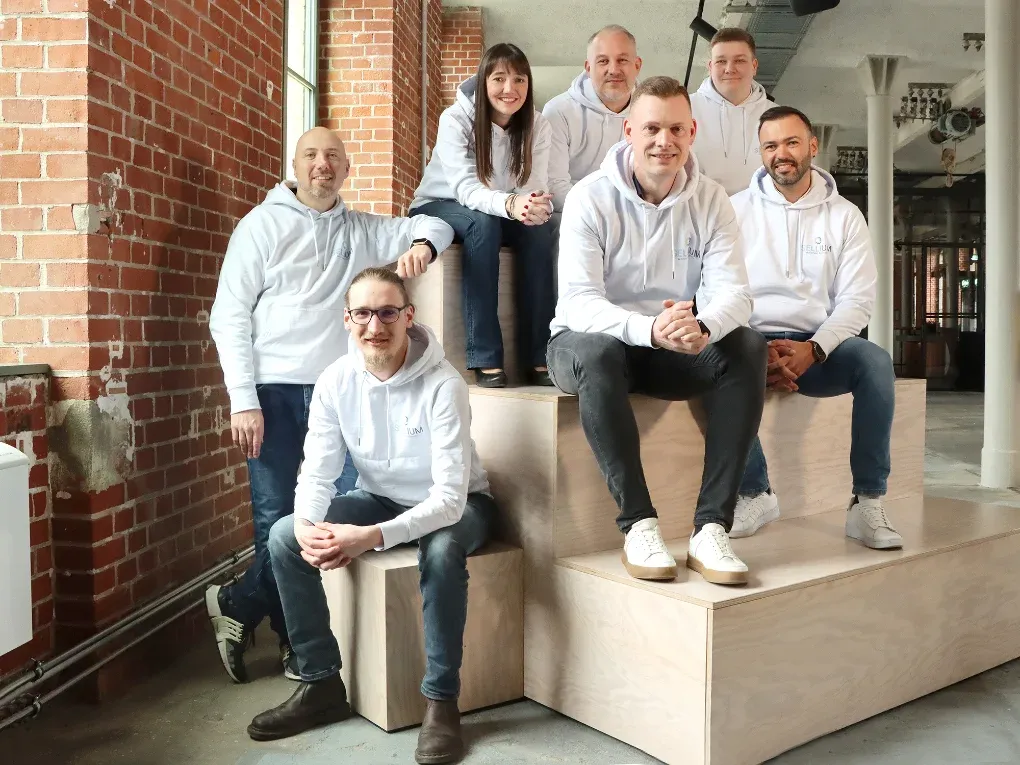
our mission
Artificial intelligence has to be made easy to understand and accessible for companies. That is what we work on with an interdisciplinary team of computer scientists, engineers and project managers. As Sellium GmbH we transform mid-sized companies through AI-powered process automation – with tailored consulting, GDPR-compliant integration of automated workflows and state-of-the-art AI training.
team

CEO | Head of Technology

CEO | Head of IT and Finance

CEO | Head of Sales and PR

Head of Education
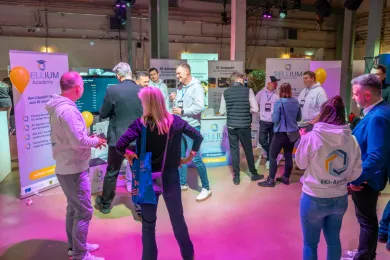
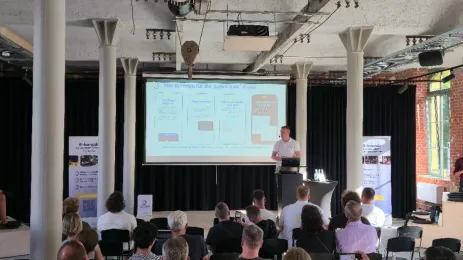

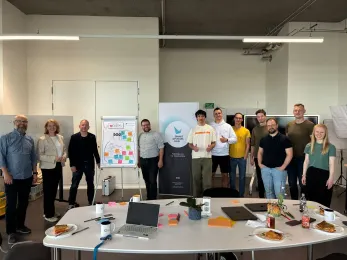

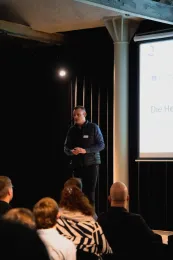
Sellium live: “KI-kompakt” evening events at fabrik chemnitz, workshops and Innovation Night — we are an active part of the AI community in central Germany.
faq
Sellium GmbH is a 360° AI agency founded in 2025 and based in Chemnitz. It offers AI consulting, AI integration and AI training for mid-sized companies – GDPR-compliant and hands-on.
Data sovereignty means companies keep full control over their data: where it is stored, who processes it and which AI models access it. Depending on requirements, Sellium achieves this on premise, in a private cloud or through shared-sovereignty models – sensitive data stays under the company's control.
Artificial intelligence refers to the development of computer systems that can perform tasks which would normally require human intelligence. It covers the creation of algorithms and models that enable machines to learn, reason, perceive and make decisions.
Routine and repetitive tasks (e.g. data analysis, simple bookkeeping, assembly-line work) are increasingly taken over by AI and automation.
Customer service: chatbots and virtual assistants partly replace simple service tasks, while complex customer interactions often remain human.
Production and logistics: robots and AI-controlled systems take over tasks in warehouses and factories.
New professions emerge, e.g. AI trainers, data scientists, AI ethics advisors or specialists in human-machine collaboration.
Creativity and social skills become more important: jobs that require empathy, creativity or strategic thinking (e.g. care, teaching, art, management) are hard to replace.
Hybrid working models: AI is often used as a tool to support people – e.g. doctors in diagnosis or designers in ideation.
Customer service & sales
AI can transform customer service by taking over repetitive tasks while raising the quality of interactions. Chatbots and virtual assistants answer standard enquiries in real time – around the clock and without waiting. That relieves your team and can cut costs by up to 30%. Lead qualification gets even more interesting: AI analyses prospect behaviour (e.g. on the website or in emails) and prioritises the most promising leads. Another big opportunity is personalisation: AI-powered recommendation systems suggest products or services that fit the customer – much like Netflix or Amazon.
Marketing & content: scalable creativity
Content creation is often time-consuming and expensive. AI can generate text, images and even video in seconds – from blog articles and social media posts to ad banners. AI is also particularly valuable for SEO: it analyses search trends, optimises keywords and even suggests structural improvements to texts.
Finance & accounting: precision without manual effort
Accounting is full of repetitive tasks such as invoice checking or data entry. With automated text recognition (OCR) and intelligent data processing, AI can take over up to 80% of the manual work. Fraud detection is even more decisive: AI systems spot suspicious transactions in real time and warn before losses occur.
Production & logistics: predictive instead of reactive
In production and logistics, predictive maintenance is one of the biggest levers: AI analyses machine sensor data and predicts when maintenance is due – before costly downtime occurs. In logistics, AI optimises delivery routes, stock levels and demand forecasts. Even quality control benefits: image processing systems detect defects in real time.
HR & people management: fairer and more efficient
In HR, AI helps evaluate applications faster and more objectively by filtering CVs against relevant criteria. It also supports training by identifying individual learning needs and suggesting tailored content.
IT & development: faster innovation, fewer errors
For development teams AI is a game changer: tools such as GitHub Copilot suggest code or find bugs before they become a problem. AI is also indispensable in cybersecurity, detecting and fending off attacks in real time.
EU AI Regulation (AI Act)
Purpose: regulation of AI systems by risk class (unacceptable, high, limited, minimal risk). Key points: ban on certain AI applications (e.g. social scoring, real-time biometric surveillance in public spaces), strict requirements for high-risk AI, transparency obligations for generative AI, fines of up to €35 million or 7% of global turnover for violations.
General Data Protection Regulation (GDPR)
Relevance: AI systems often process personal data. Key points: lawfulness, transparency and purpose limitation of processing, data subject rights (e.g. access, erasure, objection), data protection impact assessment (DPIA) for high risk, special attention to automated decision-making (Art. 22 GDPR).
Copyright
Current debate: use of copyrighted data for training AI models. EU Copyright Directive: liability and licensing are still to be clarified.
Technical norms and standards
ISO/IEC 42001 (AI management systems): standard for the responsible use of AI in organisations – risk management, transparency, ethics, compliance. IEEE standards (e.g. IEEE 7000 series): ethics, safety, privacy and reliability of AI systems. DIN SPEC 92001-1 (AI lifecycle): guideline for developing and operating AI systems in Germany. Further industry-specific regulations also apply.
blog

How the “AI First” approach makes mid-sized companies more competitive

What changes for companies from February 2025.

An overview and practical guide.
contact
Happy to help with anything AI. We will get back to you promptly.
We will get back to you shortly. If it is urgent, you can reach us at +49 371 524 99 140 or contact@sellium.ai.